GBP/USD: the pound remains under pressure
05 February 2019, 09:44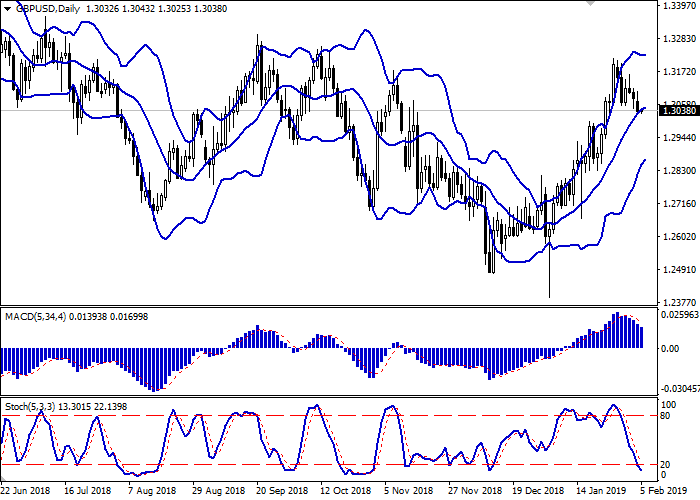
| Scenario | |
|---|---|
| Timeframe | Intraday |
| Recommendation | BUY STOP |
| Entry Point | 1.3060 |
| Take Profit | 1.3173, 1.3216 |
| Stop Loss | 1.3000 |
| Key Levels | 1.2796, 1.2838, 1.2882, 1.2929, 1.3000, 1.3054, 1.3100, 1.3139, 1.3173, 1.3216 |
| Alternative scenario | |
|---|---|
| Recommendation | SELL STOP |
| Entry Point | 1.2995 |
| Take Profit | 1.2882, 1.2838 |
| Stop Loss | 1.3054 |
| Key Levels | 1.2796, 1.2838, 1.2882, 1.2929, 1.3000, 1.3054, 1.3100, 1.3139, 1.3173, 1.3216 |
Current trend
Yesterday, GBP dropped significantly against USD, renewing its lows since January 24.
GBP is under pressure of January Construction PMI data. Following Manufacturing PMI, it has been falling for the second month in a row, this time from 52.8 to 50.6 points, the lowest level since April last year. Thus, the sector is on the verge of stagnation. The Brexit situation is forcing construction companies to cut investment and workforce. On Tuesday, Service PMI will be released, which is also likely to fall and affect GBP negatively.
In addition, today, a block of January macroeconomic statistics on business activity in the US will be released. In particular, it is predicted that ISM Service PMI will drop from 58.0 to 57.1 points, which may contribute to the appearance of an upward correction on the instrument.
Support and resistance
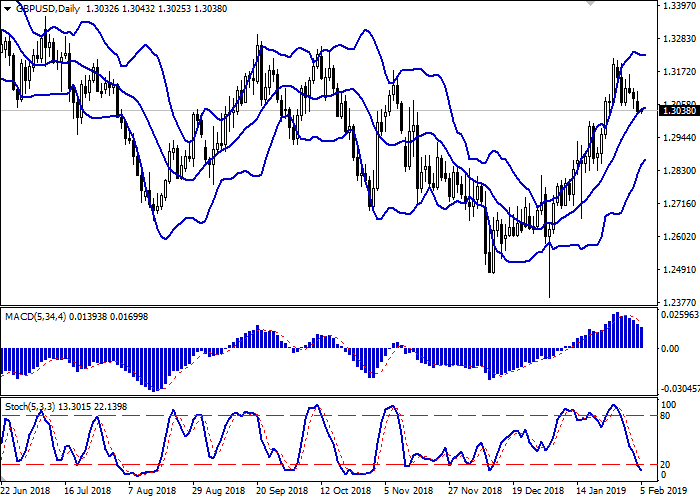
On the daily chart, Bollinger bands smoothly unfold into a horizontal plane. The price range narrows, reflecting a change in direction in the short term. MACD falls, keeping a strong sell signal (the histogram is below the signal line). Stochastic is reaching its lows, reflecting that GBP can become oversold in the super-short term.
The indicators’ readings do not contradict the further development of the “bearish” trend in the short and/or super short term.
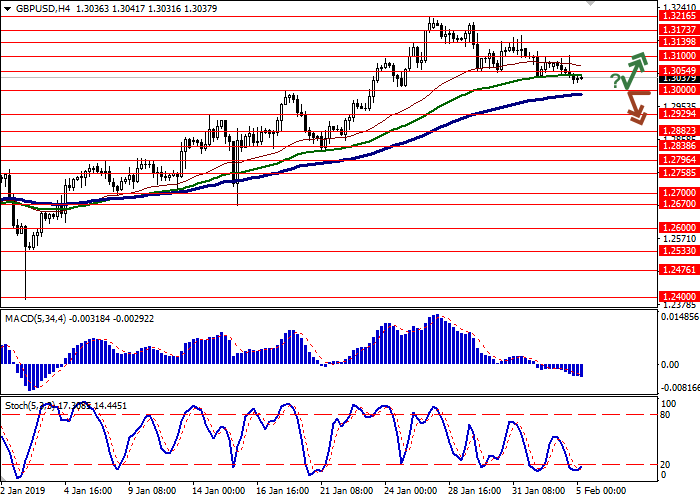
Resistance levels: 1.3054, 1.3100, 1.3139, 1.3173, 1.3216.
Support levels: 1.3000, 1.2929, 1.2882, 1.2838, 1.2796.
Trading tips
Long positions can be opened after the rebound from 1.3000 and the breakout of 1.3054 with the target at 1.3173 or 1.3216. Stop loss is 1.3000.
Short positions can be opened after the breakdown of 1.3000 with the target at 1.2882 or 1.2838. Stop loss is 1.3054.
Implementation period: 2–3 days.
Yesterday, GBP dropped significantly against USD, renewing its lows since January 24.
GBP is under pressure of January Construction PMI data. Following Manufacturing PMI, it has been falling for the second month in a row, this time from 52.8 to 50.6 points, the lowest level since April last year. Thus, the sector is on the verge of stagnation. The Brexit situation is forcing construction companies to cut investment and workforce. On Tuesday, Service PMI will be released, which is also likely to fall and affect GBP negatively.
In addition, today, a block of January macroeconomic statistics on business activity in the US will be released. In particular, it is predicted that ISM Service PMI will drop from 58.0 to 57.1 points, which may contribute to the appearance of an upward correction on the instrument.
Support and resistance
On the daily chart, Bollinger bands smoothly unfold into a horizontal plane. The price range narrows, reflecting a change in direction in the short term. MACD falls, keeping a strong sell signal (the histogram is below the signal line). Stochastic is reaching its lows, reflecting that GBP can become oversold in the super-short term.
The indicators’ readings do not contradict the further development of the “bearish” trend in the short and/or super short term.
Resistance levels: 1.3054, 1.3100, 1.3139, 1.3173, 1.3216.
Support levels: 1.3000, 1.2929, 1.2882, 1.2838, 1.2796.
Trading tips
Long positions can be opened after the rebound from 1.3000 and the breakout of 1.3054 with the target at 1.3173 or 1.3216. Stop loss is 1.3000.
Short positions can be opened after the breakdown of 1.3000 with the target at 1.2882 or 1.2838. Stop loss is 1.3054.
Implementation period: 2–3 days.



No comments:
Write comments